
Palmitoyl Tetrapeptide-7
Plamed Vision: Become the leader of natural cosmetic ingredients for sensitive skin.
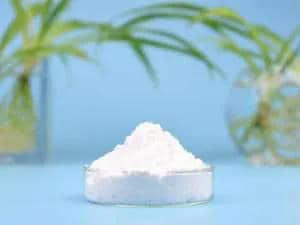
Palmitoyl Tetrapeptide-7
Palmitoyl Tetrapeptide-7 is a premium active ingredient series developed by Plamed Green Science Group. Derived from natural botanical sources, the products are standardized for highly purified actives and designed to target specific skincare concerns through advanced formulation science.
Overview
Palmitoyl Tetrapeptide-7, also known as Tetrapeptide-7 or anti-inflammatory tetrapeptide, is the most widely used anti-inflammatory and repairing signaling peptide in the global high-end cosmetics industry. It is a benchmark active ingredient for anti-aging of sensitive skin and anti-inflammatory repair of acne-prone skin. Currently, compliant production of cosmetic-grade Palmitoyl Tetrapeptide-7 is primarily via chemical synthesis. Plamed adopts solid-phase peptide synthesis to manufacture this ingredient, enabling stable production of highly active pure powder raw materials with HPLC purity ≥98.0%. The internal control standard for active peptide content is ≥85.0%, and batch measured values can reach 94.0%.
Plamed has built a differentiated advantage of international comprehensive control of total chlorine content, defining raw material purity and formula compatibility by “chlorine content”. We directly measure total chloride ion residues in raw materials, providing accurate and unambiguous data on non-active ion residues, in line with USP/EP pharmacopoeia standards. This helps formulators accurately assess the potential impact of raw materials on the formula system, greatly improving formula compatibility and development efficiency. The measured chlorine content of the product is 3.7%, far below the internal control standard of ≤8.0%, effectively filling the quality control blind spot of conventional industry testing.
Core biological activity of Palmitoyl Tetrapeptide-7: It targets the inhibition of excessive release of inflammatory mediators (such as pro-inflammatory factor IL-6), cuts off the signal transduction of chronic skin micro-inflammation, and inhibits the overexpression of matrix metalloproteinases (MMPs). At the same time, it promotes fibroblasts to synthesize Type I/III collagen, fibronectin and glycosaminoglycans, fundamentally reducing collagen degradation and redness/sensitivity caused by inflammation, acting as an anti-inflammatory stabilizer for the skin microenvironment. It also improves skin microcirculation, reduces vascular permeability and tissue fluid exudation.
Therefore, it has core skincare benefits including anti-inflammation and soothing, anti-aging and wrinkle reduction, barrier strengthening and photoaging repair. Cosmetics containing this ingredient can improve skin sensitivity and redness, dry lines and fine wrinkles, sagging, and damaged barrier. It is widely used in sensitive skin repair, high-end anti-aging and anti-inflammatory repair cosmetics.
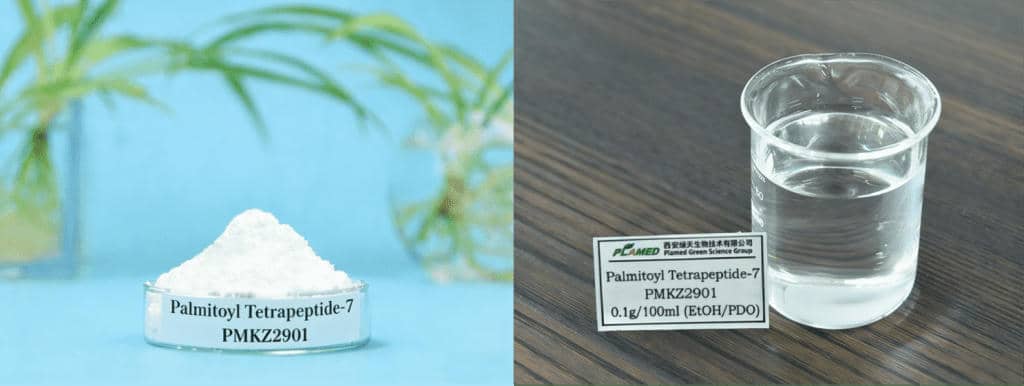
| Product Name | CAS | INCI | |
| Palmitoyl Tetrapeptide-7 | 221227-05-0 | Palmitoyl Tetrapeptide-7 | |
| Molecular Formula | Molecular Weight | Molecular Structure | |
| C34H62N8O7 | 694.8g/mol | 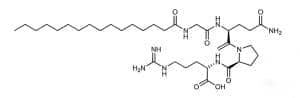 | |
| Product ID | Specification | Minimal Package | MOQ |
| PMKZ2901 | Purity ≥98.0% | 10g | 10g |