
Plamed is the largest white willow bark extract supplier in China with good white willow bark extract price and high quality.
1. White Willow Bark Extract Overview
Where to buy White Willow Bark Extract with lowering White Willow Bark Extract price? Where to find information of wholesale White Willow Bark Extract and Purchase White Willow Bark Extract for sales? As White Willow Bark Extract manufacturer & supplier, Plamed is your best choice.
White willow bark extract is an natural substitute to chemical salicylic acid. Its key component is salicin that has anti-aging properties when applied topically to the skin. Additionally, salicin is a natural exfoliant that removes the dead skin cells and clears pores. Comparing to salicylic acid (a metabolized derivative of salicin in vivo), salicin is non-irritating and more gentle to skin; it is suitable for nearly all skin types.
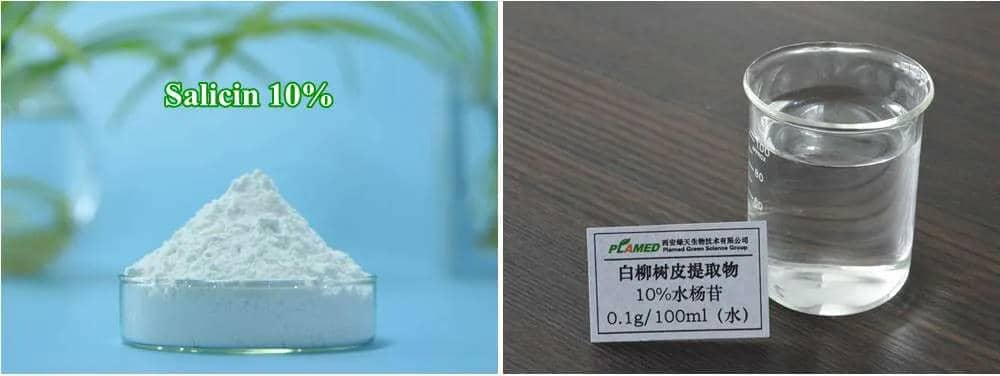
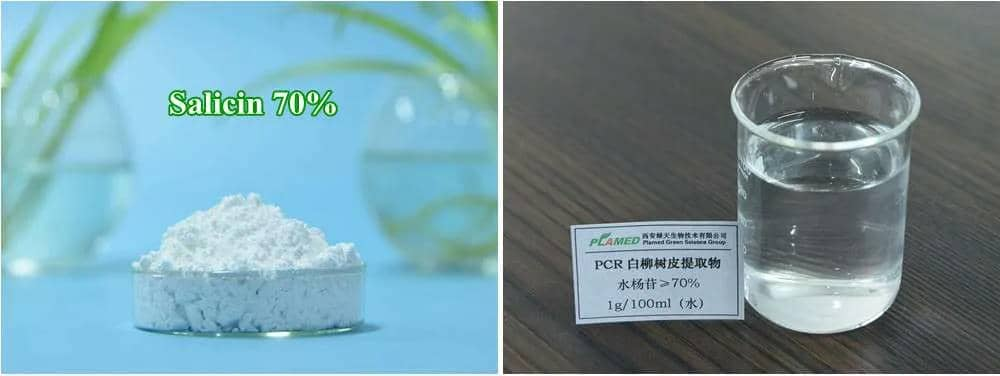
Plamed develops 2 specifications white willow bark extract; they are salicin 10% and PCR salicin 70%. Both of them have good water solubility and effective skincare benefits.
2. White Willow Bark Extract Plant Source
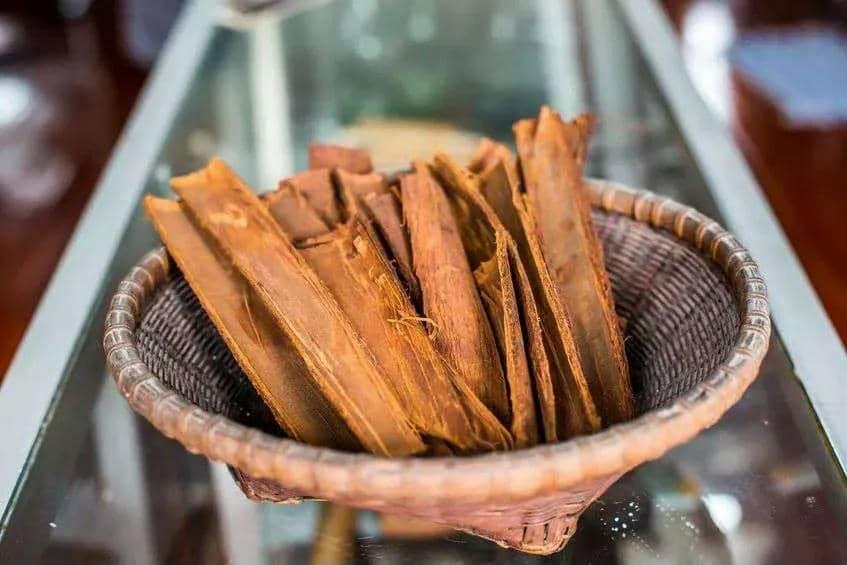
White willow bark, also Salix alba L., is a herbal preparation for medical uses for years. It usually grows in temperate and arctic zones. Historically, white willow bark has been used for more than 2000 years, initially in Egypt and Greece, and later in China, Europe, North America, South America, the Caribbean and the Mediterranean. White willow bark is a traditional pain reliever. Its main active ingredient salicin has analgesic, anti-inflammatory and anti-aging effects.
3. White Willow Bark Extract Manufacturer Specifications
70% Salicin Manufacturer Specification
Items | Specification |
Salicin content | ≥70% |
Part used | Bark |
Solubility | Soluble in water |
Appearance | White powder |
Odor & Taste | Characteristic |
Moisture | ≤10.0 |
Ash content | ≤7.0 |
pH (1% water solution) | 6.0~8.0 |
Total heavy metals (as Pb) | ≤10ppm |
Pb | ≤2ppm |
As | ≤2ppm |
Hg | ≤1ppm |
Cd | ≤5ppm |
Total plate count | ≤1000cfu/g |
Total yeast & mold | ≤100cfu/g |
Pseudomonas aeruginosa | Negative |
Staphylococcus aureus | Negative |
E. coli | Negative |
10% Salicin Manufacturer Specification
Items | Specification |
Salicin content | ≥10% |
Part used | Bark |
Solubility | Soluble in water |
Appearance | White powder |
Odor & Taste | Characteristic |
Moisture | ≤10.0 |
Ash content | ≤7.0 |
PH (1%water solution) | 6.0~8.0 |
Total heavy metals (as Pb) | ≤10ppm |
Pb | ≤2ppm |
As | ≤2ppm |
Hg | ≤1ppm |
Cd | ≤5ppm |
Total plate count | ≤1000cfu/g |
Total yeast & mold | ≤100cfu/g |
Pseudomonas aeruginosa | Negative |
Staphylococcus aureus | Negative |
E. coli | Negative |
4. White Willow Bark Extract Benefits
· Anti-Aging
Salicin, the standardized substance of white willow bark extract, is known as natural aspirin. It has the effect of gently removing dead skin cells on the skin surface and accelerating the shedding of aging skin cells. It can also regulate the skin stratum corneum, making the skin smooth and delicate, and the complexion uniform and shiny. Moreover, Salicin can enhance the vitality of epidermal cells, promote tissue renewal, and improve skin immunity.
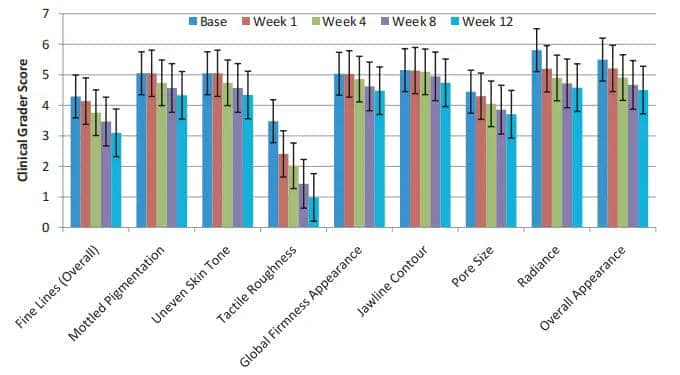
A study reported that salicin is able to reduce skin aging. It is reported that 0.5% salicin applied on the skin of participants daily. After 12 weeks, there are significant improvements in the appearance of wrinkles, pigmentation, roughness, pore size, radiance, and overall appearance.
· Anti-Acne
Salicin has aspirin-like properties, so it has a certain anti-inflammatory effect. Salicin can be used to relieve facial acne, sunburn, pimple, etc.. In vitro tests have shown white willow bark extract to have activity against Staphylococcus aureus and Propionibacterium acnes, the two strains of bacteria implicated in the formation of acne, as such it may prove useful in targeted facial cleaners, toners and lotion formulas.
5. White Willow Bark Extract Uses
· White willow barkextract is suitable to be added into facial cleanser, cream, serum, toner and other skincare products.
· White willow bark extract is safe for topical use when the concentration is less than 6.0% in cosmetic preparation.
· White willow bark extract is a promising ingredient to be added into water based cosmetics formulas.
· White willow bark extract can combine with hyaluronic acid to diminish fine lines.
· White willow bark extract is compatible with aloe vera powder in cosmetic preparation. The combination is a good choice for treatment of acne as well as moisturizing.
6. White Willow Bark Extract Cosmetics Formula
Anti-Acne Toner
Ingredient | Content (%) | Ingredient | Content (%) |
Salix Alba Bark Extract | 1.5 | Barosma Betulina Root Extract | 2.0 |
Atractyloides Lancea Root Extract | 0.5 | 1,2-Hexanediol | 0.3 |
Azadirachta Indica Bark Extract | 1.5 | Scutellaria Baicalensis Extract | 1.0 |
Houttuynia Cordata Extract | 1.0 | Phenoxyethanol | 0.2 |
Peg-40 Hydrogenated Castor Oil | 0.1 | Glycerin | 2.0 |
Corn Kernel Extract | 6.0 | Niacinamide | 2.0 |
Pyrus Communis (Pear) Fruit Juice | 2.0 | Methylparaben | 0.1 |
Mentha Arvensis Leaf Extract | 0.005 | Water | Add To 100 |
Related Reading
1. White Willow Bark (Salix Alba ) Extract for Skin Care
2. Salicin Skin Benefits, Compared to Salicylic Acid
Plamed focuses on natural cosmetic ingredients for more than 10 years. We have founded four subsidiary companies, which respectively develops different kinds of cosmetic raw material. Plamed is a company whose CEO is designated as the first secretary general of Shaanxi Plant Extraction Association.
Plamed Mission: To be the most professional supplier of natural cosmetics raw material.
As a professional white willow bark extract manufacturer, Plamed have been constantly upgrading the production process. We firmly believe that good white willow bark extract and good white willow bark extract price will help customers make good terminal products and help customers win a lasting and broad market.