
PMRepair® Centella | Skin Barrier Repair Active
PMRepair® Centella (INCI: CENTELLA ASIATICA EXTRACT, CAS 84696-21-9) — a 70% total triterpenes centella asiatica extract standardized on asiaticoside and madecassoside, validated on 3D skin models for FLG, LOR and TGM1 expression — supplied by Plamed (PMRP0101), water-soluble and easy to formulate.
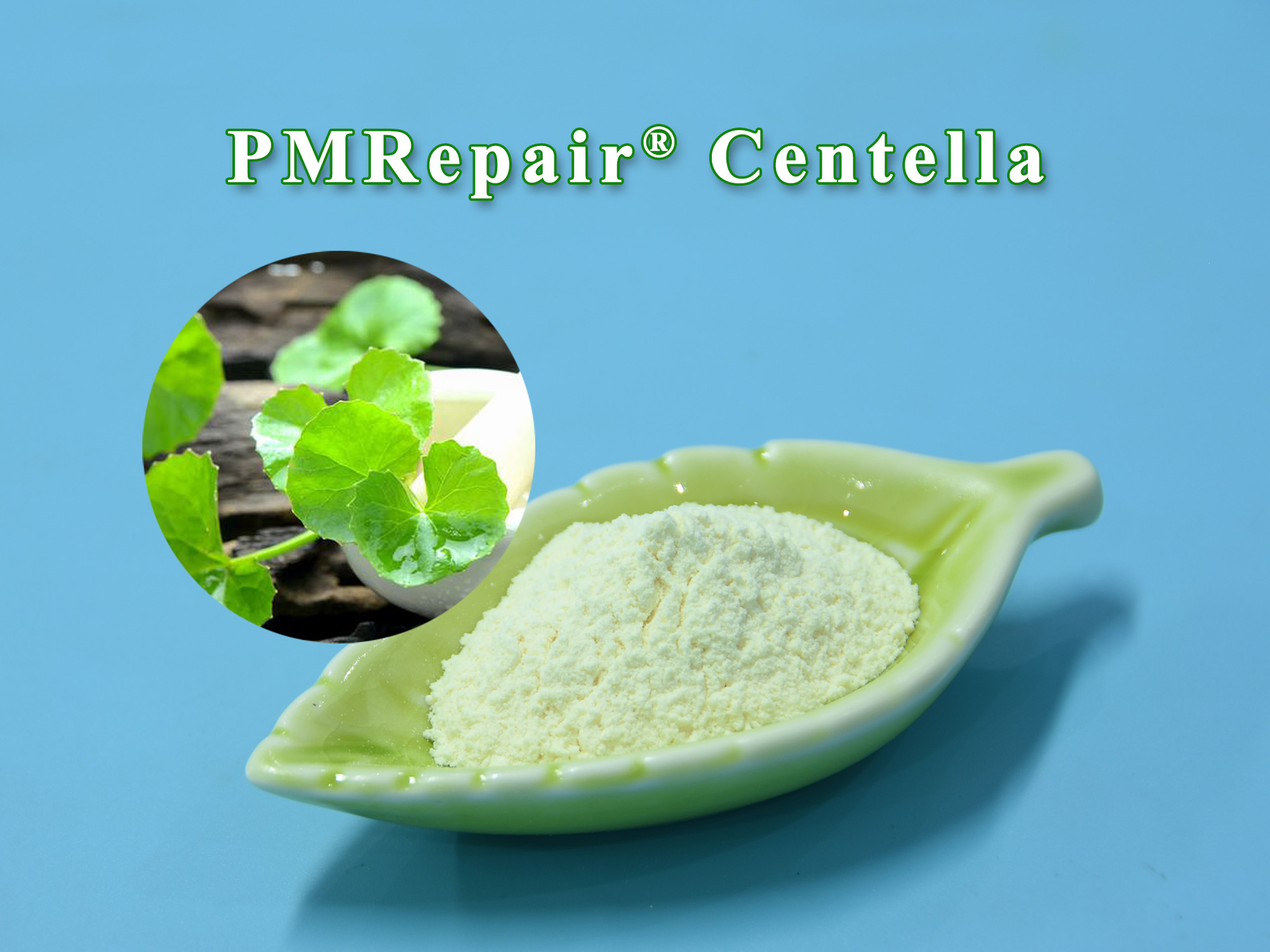
Skin Repair Ingredient PMRepair® Centella
PMRepair® Centella is a centella asiatica repair active that helps promote skin barrier recovery and improves the condition of sensitive and compromised skin — widely used in repair, soothing and post-aesthetic-procedure skincare products.
Plamed validates the repair activity of PMRepair® Centella on 3D skin models: it upregulates barrier-related proteins including FLG, LOR and TGM1, giving repair-product development a botanical active backed by measurable data.
At a glance
Attribute | Value |
INCI name | CENTELLA ASIATICA EXTRACT |
CAS number | 84696-21-9 |
Product ID | PMRP0101 |
Specification | 70% Total Triterpenes (Asiaticoside + Madecassoside + Asiaticoside B) ≥70% |
Appearance | Off-white to pale yellow powder |
Solubility | Water or butanediol; clear solution at 0.1%–0.2% (pH < 6) or in 35% butylene glycol |
Reference dosage | 0.1%–0.5% (validated optimum 0.15%) |
MOQ | 1 kg |
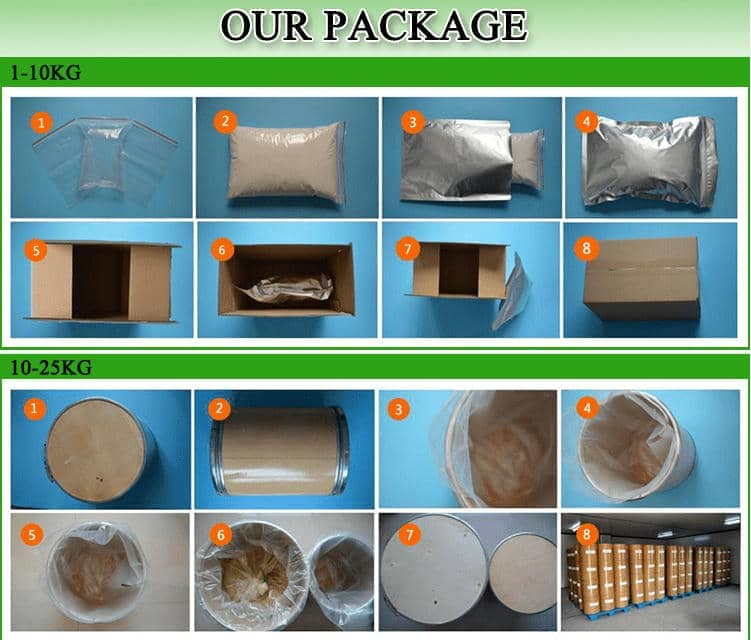
Package | Aluminum foil bag, 1 kg/bag |
PMRepair® Centella is a standardized centella asiatica extract whose main actives — asiaticoside and madecassoside — belong to triterpenoid saponins, while asiatic acid and madecassic acid belong to triterpene acids. In cosmetics it works as a water-soluble skin-repair active, dosed at 0.1%–0.5% in leave-on and wash-off formulas.
In short: PMRepair® Centella is a 70% total triterpenes centella asiatica extract (INCI: CENTELLA ASIATICA EXTRACT, CAS 84696-21-9, PMRP0101) — Plamed's repair active, validated on 3D epidermis models to upregulate FLG, LOR and TGM1, dosed 0.1%–0.5% with a validated optimum of 0.15%.
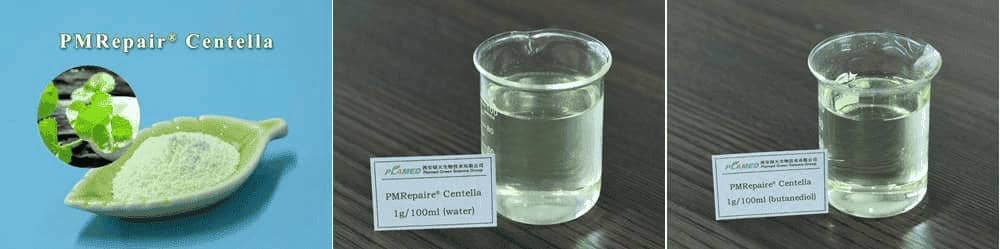
What it is.
Centella asiatica extract is one of the most documented botanical actives in centella asiatica skincare: its triterpenoid profile (asiaticoside, madecassoside, asiatic acid, madecassic acid) supports repair, soothing and antioxidant performance. PMRepair® Centella standardizes the madecassoside-family fraction at ≥70% total triterpenes, so formulators get the centella asiatica extract ingredients that matter — without the batch variability of crude extracts.
How it works.
In Plamed's 3D epidermis model study, PMRepair® Centella restored living-cell layer thickness and upregulated three barrier markers — filaggrin (FLG), loricrin (LOR) and transglutaminase 1 (TGM1) — after SLS-induced injury. These proteins build the stratum corneum's structure and cohesion, which is how the extract delivers measurable centella skin barrier repair rather than a generic botanical claim (see the data table under Mechanism & Effects).
Where it fits in skin care.
Barrier-repair serums and creams, sensitive-skin lines, soothing formulas where brands ask for proven centella soothing cream ingredients, and post-procedure care after aesthetic dermatology treatments.
Where does centella asiatica extract come from?
Centella asiatica — also known as Gotu Kola — is the dried whole plant of Centella asiatica (L.) Urban, a perennial creeping herb with slender stems. Native to India and now widespread across tropical and subtropical regions, it has been used in China's herbal tradition for more than 2,000 years; Madagascar, South Africa, India, Southeast Asia and South America have also used it traditionally. The cosmetic-relevant actives are asiaticoside and madecassoside, plus asiatic acid and madecassic acid.
Gotu kola extract benefits for skin. The same triterpenoids that made gotu kola a classic herbal remedy are what modern formulators use for barrier repair and soothing — which is why gotu kola extracts appear in so many sensitive-skin and repair launches today.
Plamed sources high-quality centella asiatica plants as the extraction raw material, then standardizes the extract to ≥70% total triterpenes to deliver consistent, formulation-ready PMRepair® Centella.
What is in the PMRepair® Centella specification sheet?
Test group | Item | Specification |
Identity | Product name / Product ID | PMRepair® Centella / PMRP0101 |
Assay | 70% Total Triterpenes (Asiaticoside + Madecassoside + Asiaticoside B) | ≥70% |
Organoleptic | Appearance | Off-white to pale yellow powder |
Organoleptic | Odor | Characteristic |
Physical characteristics | Moisture | ≤10.0% |
Physical characteristics | Ash content | ≤7.0% |
Heavy metals | Pb / As / Hg / Cd | ≤10 / ≤2 / ≤1 / ≤5 ppm |
Microbiological | Total plate count | ≤1000 cfu/g |
Microbiological | Yeast & mold | ≤100 cfu/g |
Microbiological | Pseudomonas aeruginosa / Staphylococcus aureus / Heat-resistant Escherichia coli | Not detected |
How to read the specification sheet:
Assay (A) — "70% Total Triterpenes" is the sum of the three madecassoside-family glycosides (asiaticoside + madecassoside + asiaticoside B) measured by HPLC. This is the number that decides efficacy per gram; anything below 70% means more inactive carrier.
Physical characteristics (B) — Moisture ≤10.0% protects the powder from caking and microbial growth during storage; ash ≤7.0% reflects inorganic residue from the plant material.
Heavy metals & microbiology (C) — Pb/As/Hg/Cd limits and the three "Not detected" pathogens are the safety baseline most brand QA teams screen against; request the COA per batch to verify.
How does PMRepair® Centella repair the skin barrier?
Plamed tested repair efficacy in an in vitro 3D epidermis skin model. Sodium lauryl sulfate (SLS), an anionic surfactant, was used to injure the model and construct an in vitro skin-injury state; PMRepair® Centella was then applied, and efficacy was evaluated by tissue morphology and the expression of three barrier proteins: filaggrin (FLG), loricrin (LOR) and transglutaminase 1 (TGM1).
Test design:
Group | Meaning |
BC | Blank control (untreated model) |
NC | Negative control (SLS-injured, no treatment) |
PC | Positive control |
PMRepair® Centella | SLS-injured + PMRepair® Centella treatment |
Asiaticoside (95%) | SLS-injured + 95% asiaticoside reference treatment |
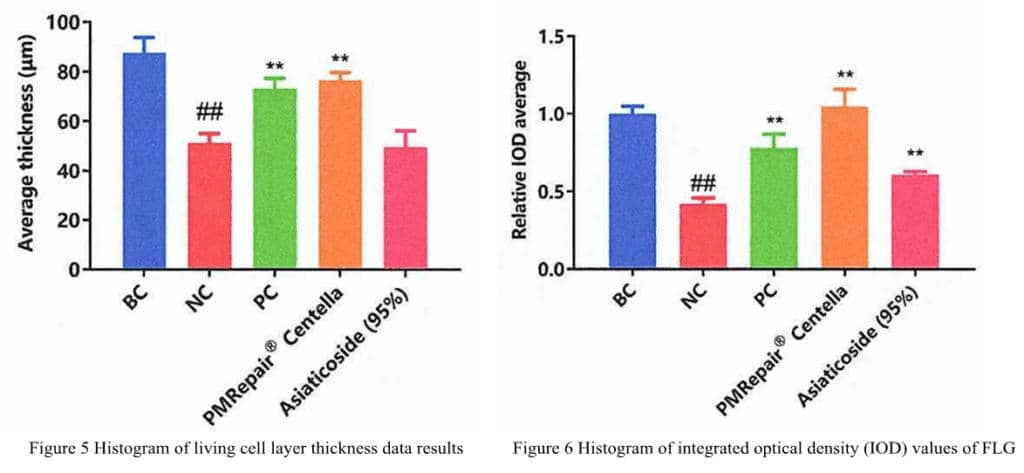
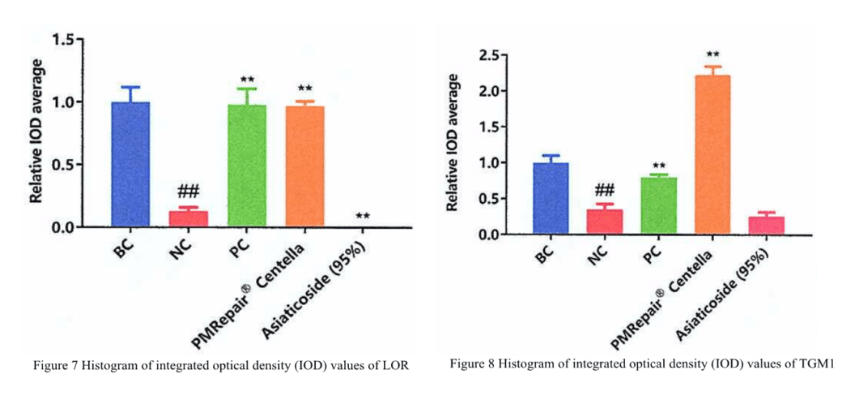
Measured results — approximate values read from Figures 5–8:
Endpoint | BC | NC | PC | PMRepair® Centella | Asiaticoside (95%) |
Living cell layer thickness (µm, Figure 5) | ~88 | ~51 (## vs BC) | ~74** | ~77** | ~50** |
FLG relative IOD (Figure 6) | 1.0 | ~0.42 (## vs BC) | ~0.78** | ~1.02** | ~0.60** |
LOR relative IOD (Figure 7) | 1.0 | ~0.15 (## vs BC) | ~1.00** | ~0.97** | ≈0** |
TGM1 relative IOD (Figure 8) | 1.0 | ~0.35 (## vs BC) | ~0.85** | ~2.2** | ~0.30** |
(## p<0.01 vs BC; ** p<0.01 vs NC)
Three findings matter for formulators. First, PMRepair® Centella nearly restored living-cell layer thickness to the uninjured level (~77 µm vs. ~88 µm blank control) after SLS injury — visible in tissue morphology, not just in markers. Second, it recovered FLG and LOR expression to the level of the blank control (~1.0 relative IOD), while the 95% asiaticoside reference recovered only partially. Third, TGM1 — the enzyme that cross-links the cornified envelope — was upregulated ~2.2× over the blank control, the strongest single signal in the study. Together these data support the positioning: cost-efficient versus the 95% asiaticoside reference, with higher measured barrier-protein expression in this 3D model.
What is the recommended dosage of PMRepair® Centella?
Product type | Applicable range |
Leave-on cosmetics | 0.1%–0.5% |
Wash-off cosmetics | 0.1%–0.5% |
Note: In the 3D epidermis model study, PMRepair® Centella at 0.15% delivered very good efficacy results, so the recommended working range is 0.1%–0.2%; the applicable range extends to 0.5% depending on the formula positioning.
How do you dissolve PMRepair® Centella?
The water solution of PMRepair® Centella is clear and transparent, but it may turn cloudy after standing for a long time. Two dissolution methods are recommended:
1. 35% butylene glycol + 65% deionized water — the solution stays clear and transparent over long storage.
2. Pure water at 0.1%–0.2% concentration with pH below 6 — the aqueous solution is clear and transparent.
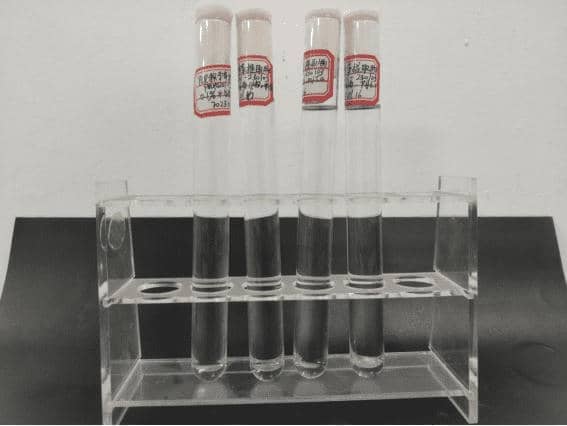
From left to right: 0.1% aqueous solution; 0.1% aqueous solution + 0.5% phenoxyethanol;
0.1% aqueous solution, PH=5; 0.1% aqueous solution, PH=6.
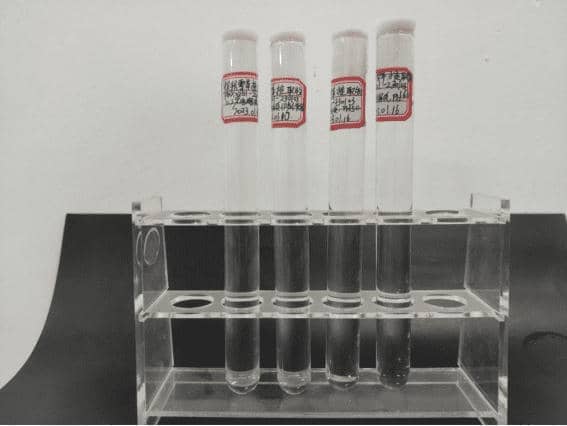
From left to right: 0.2% aqueous solution; 0.2% aqueous solution + 0.5% phenoxyethanol;
0.2% aqueous solution, PH=5; 0.2% aqueous solution, PH=6.
Is centella asiatica extract safe for cosmetics?
· Centella Asiatica Extract is listed in the IECIC (Inventory of Existing Cosmetic Ingredients in China, 2021) and was recognized by CTFA (now PCPC) as a cosmetic raw material; there are no reports indicating it is unsafe for external use.
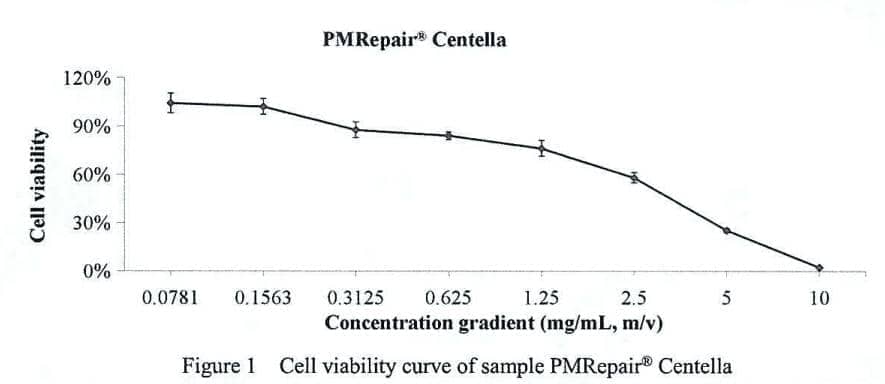
· Plamed tested a cytotoxicity assay of PMRepair® Centella: based on keratinocytes, no significant cytotoxicity was observed within the tested range up to 0.1563 mg/mL.
How much does PMRepair® Centella cost, and what is the MOQ?
Supply:
Item | Detail |
MOQ | 1 kg |
Package | Aluminum foil bag, 1 kg/bag |
Storage | Cool, dry place, away from direct sunlight and oxidizing agents |
Lead time | Confirm with sales |
Documents | See Available Document below (10 items) |
What PMRepair® Centella offers
A 70% total triterpenes centella asiatica extract standardized on asiaticoside and madecassoside, water-soluble, validated on 3D skin models for FLG, LOR and TGM1 expression, and cost-efficient versus the 95% asiaticoside reference — the specification behind repair and post-procedure skincare launches.
Available Document of MRepair® Centella:
Certificate of Analysis (COA)
Material Safety Data Sheet (MSDS)
Product Specification (SPEC)
Manufacturing Process Flowchart
Analytical / HPLC Test Method
Solubility & Thermal Stability Test Reports
Third-Party Safety & Irritation Reports (Eye Irritation Test, Heavy Metals & Microbial)
Third-Party Efficacy Reports (Zebrafish Skin Barrier & Fin Regeneration, Cell Scratch Assay)
Product Brochure & Presentation Dossier
To request a quote or a sample, contact Plamed Green Science Group here.
Centella asiatica extract manufacturer and wholesale supplier
Plamed is a centella asiatica extract manufacturer and wholesale supplier of PMRepair® Centella (PMRP0101, 70% total triterpenes). Whether you are comparing centella asiatica extract powder manufacturers for a repair line or screening a centella asiatica extract for skin manufacturer with 3D-model data, Plamed supports the decision with the full document package above and free lab-evaluation samples.
Madecassoside supplier in China
As a madecassoside skincare supplier in China, Plamed standardizes PMRepair® Centella on the madecassoside-family fraction (asiaticoside + madecassoside + asiaticoside B ≥70%). If your project needs a madecassoside supplier with measured barrier-repair data rather than a commodity extract, request the quotation and the study dossier together.
Price and wholesale supply
Price depends on specification, order volume and destination documentation. Source directly from the manufacturer: request a quotation matched to your volume — from 1 kg lab trials to wholesale supply for production.
Q1: What is madecassoside, and how does it relate to PMRepair® Centella?
A: Madecassoside is one of the main triterpenoid saponins in centella asiatica extract, alongside asiaticoside, asiatic acid and madecassic acid. PMRepair® Centella is a standardized centella asiatica extract in which the madecassoside-family fraction (asiaticoside + madecassoside + asiaticoside B) is ≥70% — so you get the madecassoside ingredient activity with the synergy of the full triterpene profile.
Q2: What are the benefits of madecassoside for skin?
A: Madecassoside benefits for skin center on barrier repair and soothing: in Plamed's 3D epidermis study, PMRepair® Centella restored living-cell layer thickness after SLS injury and upregulated FLG, LOR and TGM1 — the proteins that build the stratum corneum — to or above blank-control levels. Madecassoside skincare benefits for the face therefore show up as a stronger, more resilient barrier and calmer skin.
Q3: Asiaticoside vs madecassoside — which is better?
A: They are sister compounds from the same plant and work together. In the same 3D model study, PMRepair® Centella (the combined asiaticoside + madecassoside fraction) outperformed the 95% asiaticoside reference on FLG, LOR and TGM1 recovery — evidence that the combined profile beats a single isolated glycoside.
Q4: Is madecassoside good for oily skin and sensitive skin?
A: Yes to both, for different reasons. For sensitive skin, it calms visible irritation and rebuilds the damaged barrier — the core use case validated in the 3D model. For oily skin, it is water-soluble and used at just 0.1%–0.5%, so it adds repair activity without the heavy emollient load of oil-based actives.
Q5: What does "centella skin barrier repair" actually mean in a formula?
A: It means measurable recovery of barrier structure: in PMRepair® Centella's 3D epidermis study, living-cell layer thickness returned from ~51 µm (injured) to ~77 µm (near the ~88 µm healthy level), with FLG, LOR and TGM1 expression restored — not just a marketing label.
Q6: What is the recommended dosage of PMRepair® Centella?
A: 0.1%–0.5% applicable range for leave-on and wash-off products; the recommended working range is 0.1%–0.2%, since 0.15% delivered very good results in the 3D epidermis model study.
Q7: Is centella asiatica the same as gotu kola?
A: Yes — gotu kola is the traditional name for Centella asiatica (L.) Urban, the same plant. Gotu kola extract benefits for skin come from the same triterpenoids (asiaticoside, madecassoside, asiatic acid, madecassic acid) that PMRepair® Centella standardizes at ≥70%.
Q8: What is the MOQ, price and lead time?
A: MOQ is 1 kg, packed in 1 kg aluminum foil bags. Price depends on volume and documentation needs — request a quotation; lead time is confirmed per order.
Q9: What documents do you provide with PMRepair® Centella?
A: TDS, COA, MSDS, Product Specification (SPEC), Manufacturing Process Flowchart, Analytical / HPLC Test Method, Solubility & Thermal Stability Test Reports, Third-Party Safety & Irritation Reports (Eye Irritation Test, Heavy Metals & Microbial), Third-Party Efficacy Reports (Zebrafish Skin Barrier & Fin Regeneration, Cell Scratch Assay), and a Product Brochure & Presentation Dossier.
Q10: Which products is PMRepair® Centella used in?
A: Barrier-repair serums and creams, sensitive-skin soothing lines (as proven centella soothing cream ingredients), and post-aesthetic-procedure care — anywhere a water-soluble, data-backed centella repair active is needed.