
Hydroxypropyl Tetrahydropyrantriol | Anti-Aging Active for GAGs & Collagen
Hydroxypropyl tetrahydropyrantriol (CAS 439685-79-7) is a xylose-derived anti-aging active that promotes GAGs and collagen synthesis across the epidermis, dermal-epidermal junction and dermis — supplied by Plamed as a 98% grade powder (purity ≥99% HPLC)and a 30% liquid, both water-soluble.
Hydroxypropyl Tetrahydropyrantriol
A classic structure-building anti-aging active. It promotes the production of glycosaminoglycans (GAGs) and collagen — key extracellular matrix components — helping reinforce the skin's supporting structure and improve sagging, fine lines and loss of elasticity.
Plamed supplies two grades: a 98% grade powder (purity ≥99% HPLC)and a 30% liquid, both water-soluble with good stability and formulation compatibility. Low acetic acid and borate residues make it particularly suitable for premium anti-aging and repair formulations.
At a glance
Item | Detail |
Product | Hydroxypropyl Tetrahydropyrantriol |
Product IDs | PMKZ2201 (30% liquid) / PMKZ2202 (98% powder) |
INCI name | HYDROXYPROPYL TETRAHYDROPYRANTRIOL |
CAS number | 439685-79-7 |
Molecular formula | C₈H₁₆O₅ |
Molecular weight | 192.21 g/mol |
Origin of molecule | Xylose-derived synthetic active |
Available grades | 30% liquid / 98% powder (purity ≥99% HPLC) |
Solubility | Water-soluble (both grades) |
Function | Anti-aging: promotes GAGs & collagen synthesis; strengthens DEJ; barrier repair |
Reference dosage | 30% liquid: 0.2%–3% leave-on / 0.3%–5% wash-off; 98% powder: 0.5%–2% |
Biodegradability | Readily biodegradable, non-accumulative, no toxicity (per studies) |
MOQ | 1 kg (both grades) |
Hydroxypropyl tetrahydropyrantriol (INCI: HYDROXYPROPYL TETRAHYDROPYRANTRIOL; CAS 439685-79-7) is a xylose-derived anti-aging active supplied by Plamed as a 99% powder (PMKZ2202) and a 30% liquid (PMKZ2201). Used at 0.2%–3%, it rebuilds GAGs and collagen across the epidermis, DEJ and dermis.
In short: Hydroxypropyl Tetrahydropyrantriol is a xylose-derived anti-aging active that restarts the production of glycosaminoglycans (GAGs) — the skin's natural water-holding "cushion" — and supports collagen networks across all layers of aging skin.
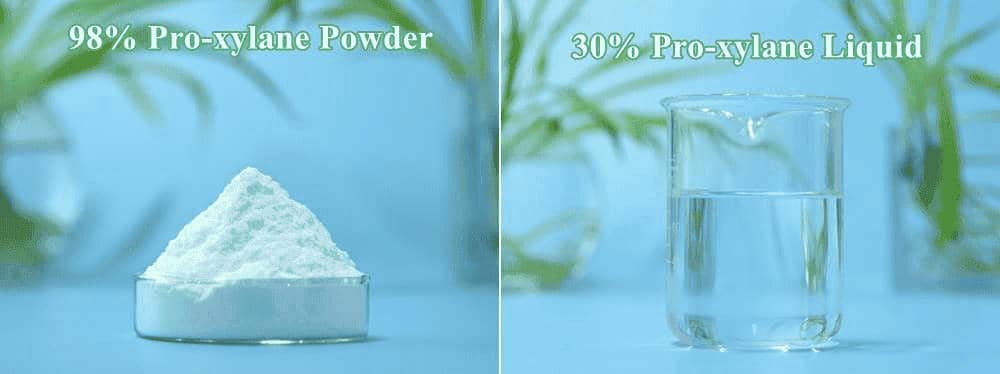
What it is.
Hydroxypropyl Tetrahydropyrantriol is a synthetic xylose derivative. Xylose exists in large quantities in beech trees and has the ability to promote the production of glucosaminoglycans (GAGs, mucopolysaccharides). It provides binding sites for GAGs, initiates their generation and assembly in the skin, and corrects the GAG deficiency caused by skin aging.
Two formulation-friendly grades. Plamed develops two grades — a 30% liquid (PMKZ2201) and a 98% powder (PMKZ2202, purity ≥99% HPLC) — both water-soluble, stable and easy to incorporate into serums, creams, lotions and masks for anti-aging products.
Safety profile. Studies have shown that Hydroxypropyl Tetrahydropyrantriol is easy to biodegrade, does not accumulate in organisms, and has no toxicity.
From xylose research to a benchmark anti-aging molecule
The molecule behind Hydroxypropyl Tetrahydropyrantriol was born from xylose research: Dr. Maria Dalko-Csiba, a scientist at the L'Oréal R&D and Innovation Center, leveraged the GAG-promoting characteristic of xylose — abundantly available from beech and birch trees. Between 1999 and 2000, she led a team that synthesized more than 200 xylose derivatives; based on efficacy, safety, stability and skin bioavailability, the molecule now known by the INCI name Hydroxypropyl Tetrahydropyrantriol was finally screened out.
Nowadays, Hydroxypropyl Tetrahydropyrantriol is mainly obtained by chemical synthesis — the route Plamed uses for both its 30% liquid and 98% powder grades.
98% Powder specification
Items | Specification |
Purity | ≥99% HPLC |
Appearance | White to off-white powder |
Odor | Characteristic |
Physical characteristics |
|
Loss on drying | ≤3.0% |
pH (10% water solution) | 4.0–8.0 |
Heavy metals |
|
Pb | ≤10 ppm |
As | ≤2 ppm |
Hg | ≤1 ppm |
Cd | ≤5 ppm |
Microbiological tests |
|
Total plate count | ≤1000 cfu/g |
Yeast & mold | ≤100 cfu/g |
Pseudomonas aeruginosa | Negative |
Staphylococcus aureus | Negative |
Heat-resistant Escherichia coli | Negative |
How to read this sheet
· Product name 98% vs specification ≥99% — the product is named "98% powder" while the HPLC-tested specification is ≥99%; the recommended public wording is "98% grade, purity ≥99% HPLC", so each number keeps its own meaning.
pH window 4.0–8.0 — unusually wide, meaning the material is not demanding about formulation pH and can be used in both acidic (vitamin C type) and mildly alkaline systems.
How does hydroxypropyl tetrahydropyrantriol work across the skin's three layers?
In short: Hydroxypropyl Tetrahydropyrantriol acts at three levels — epidermis, dermal-epidermal junction (DEJ) and dermis — reconstructing the skin's supporting structure from barrier to deep collagen networks.
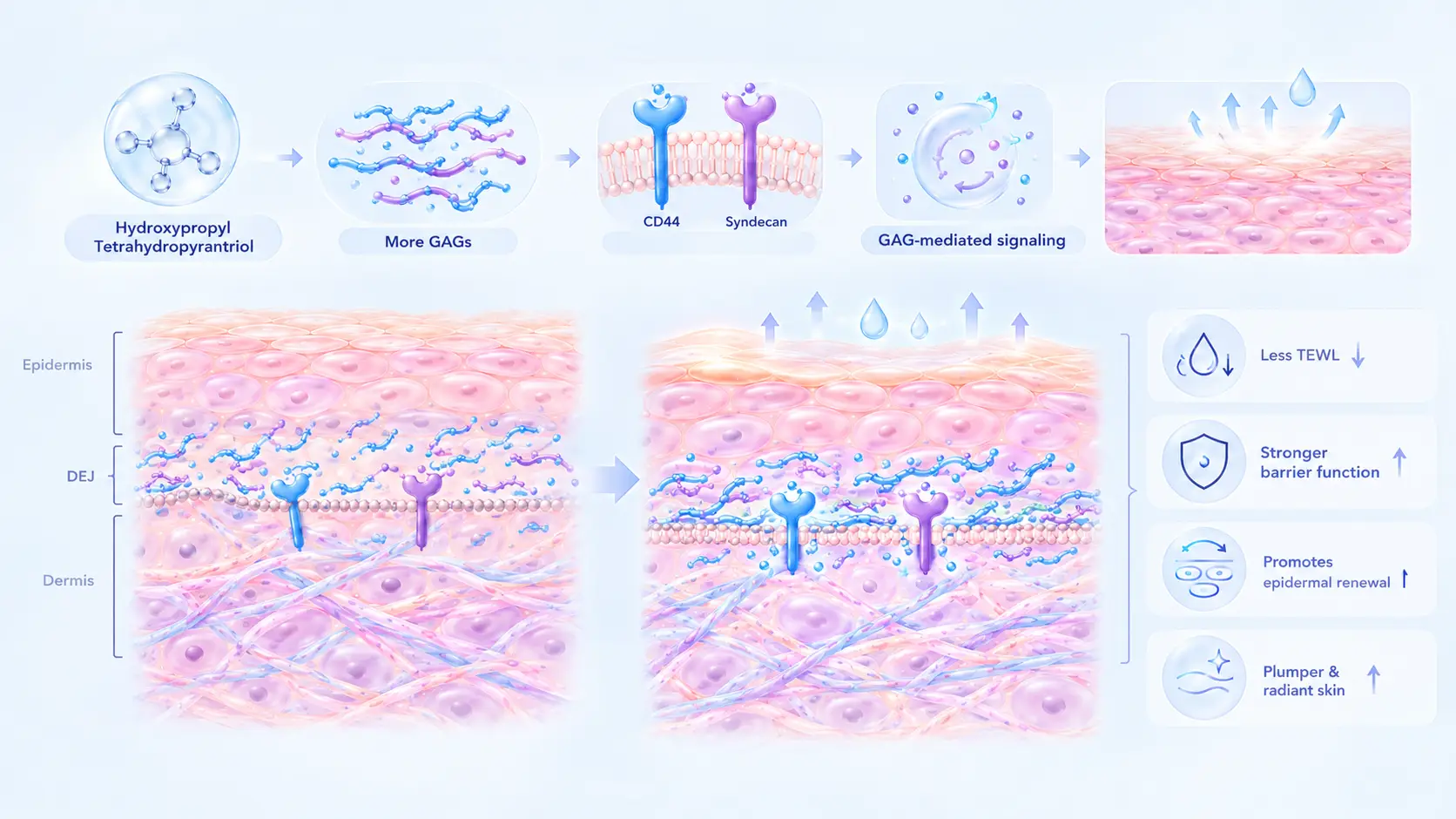
Epidermis: barrier and renewal. Hydroxypropyl Tetrahydropyrantriol promotes the synthesis of various GAGs and up-regulates the expression of the hyaluronic acid receptor CD44 and syndecan, activating GAG-mediated signaling. Clinical studies show that topical application effectively reduces transepidermal water loss, improves skin barrier function and promotes epidermal renewal — making skin plump and radiant.
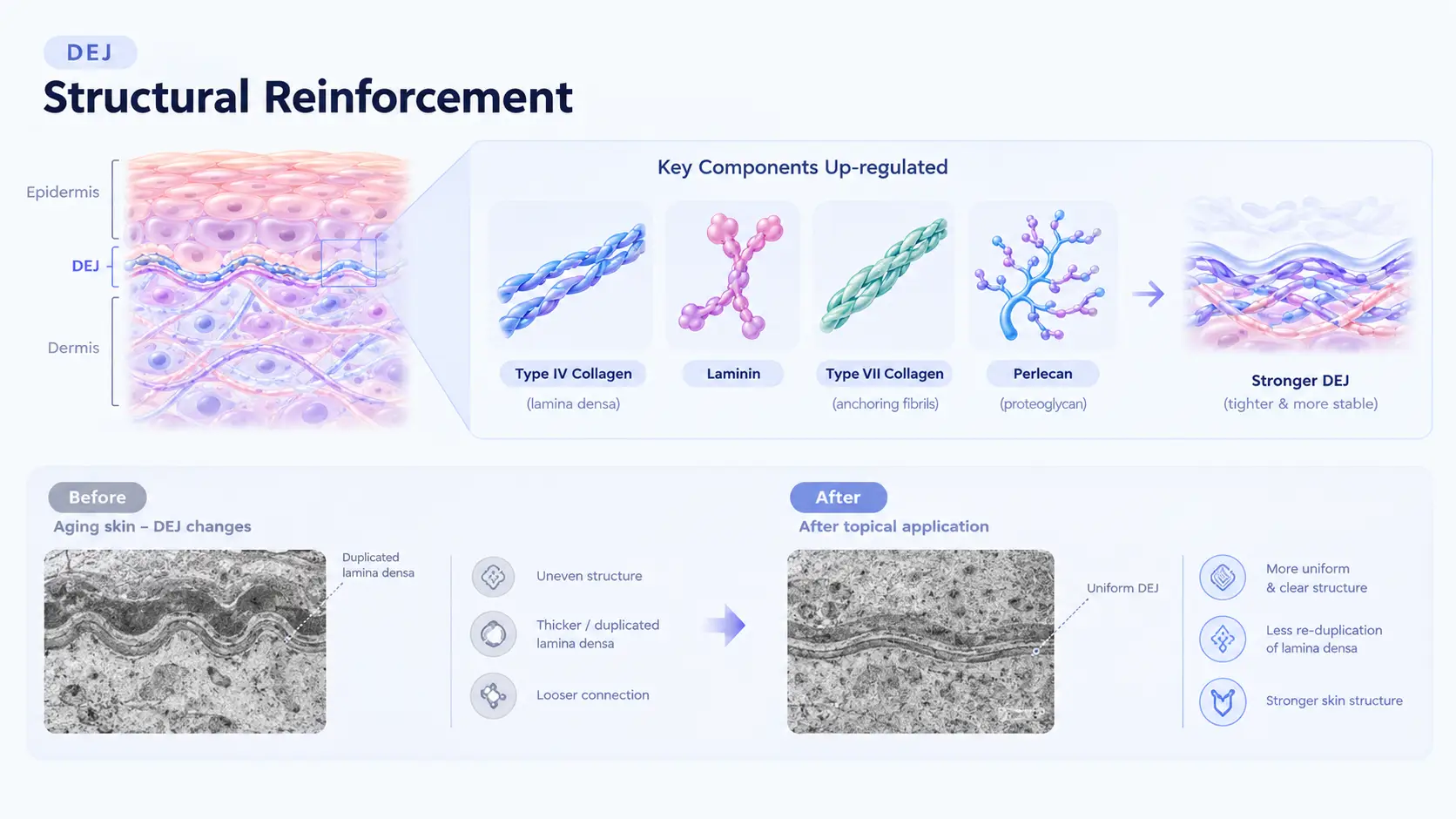
DEJ: structural reinforcement. At the dermal-epidermal junction, it up-regulates type IV collagen (main component of the lamina densa), laminin and type VII collagen (main component of anchoring fibrils), and induces the expression of the proteoglycan perlecan — strengthening the tightness and stability of the DEJ. In clinical studies on aging skin samples, the ultrastructure of the DEJ showed aging characteristics in several areas; after topical application, the DEJ became more uniform and clear, with significantly reduced re-duplication of the lamina densa — a stronger skin structure.
Dermis: GAGs and collagen. In the dermis, it promotes production of GAGs such as hyaluronic acid and heparan sulfate, and up-regulates type I procollagen and fibrillin-1 — both key dermal extracellular matrix components maintaining skin elasticity and firmness. Clinical research confirms that topical application effectively improves fine lines and wrinkles, leaving skin firm and elastic.
Skin repair: retinoid-like benefits without irritation
In short: in vitro skin experiments show it can reconstruct the complete epidermal-dermal structure and enhance stratum corneum thickness like retinoic acid — providing barrier function without irritation.
In vitro skin experiments show that Hydroxypropyl Tetrahydropyrantriol can reconstruct the complete structure of the epidermal-dermal layers and has a function similar to retinoic acid: it enhances the thickness of the stratum corneum and provides barrier function — but without irritation. This makes it a gentle structural anti-aging option for sensitive or retinoid-intolerant skin.
Why it belongs on your anti-aging ingredients list
Among anti-aging ingredients to look for, Hydroxypropyl Tetrahydropyrantriol stands out for working on structure rather than single pathways: GAGs for water cushioning, DEJ proteins for dermal-epidermal anchoring, collagen and fibrillin for firmness. For brands building science-backed skincare ingredient decks, it pairs well with peptides, niacinamide and antioxidants in premium firming and repair formulas.
Which products use hydroxypropyl tetrahydropyrantriol, and at what dosage?
Where it fits
Hydroxypropyl Tetrahydropyrantriol is mainly used in anti-aging, skin repair and anti-wrinkle skincare — serum, facial mask, emulsion, toner, essence, cream, etc.
Reference dosage
Grade | Reference dosage |
30% Hydroxypropyl Tetrahydropyrantriol liquid | 0.2%–3% in leave-on cosmetics; 0.3%–5% in wash-off cosmetics |
98% Hydroxypropyl Tetrahydropyrantriol powder | 0.5%–2% |
Application scenarios
Scenario | Role of the active | Typical pairing |
Firming anti-aging serum / cream | Dermal GAGs + type I procollagen support | Peptides, niacinamide |
Barrier-repair lines | TEWL reduction, epidermal renewal | Ceramides, panthenol, ectoin-type protectors |
Retinol-alternative / retinoid-intolerant products | Retinoid-like barrier thickening without irritation | Bakuchiol-type actives |
Premium "structural anti-aging" lines | DEJ reinforcement, anti-sagging | Antioxidants (vitamin C derivatives) |
Eye contour products | Fine lines, elasticity support | Caffeine, peptides |
Is hydroxypropyl tetrahydropyrantriol safe? Regulatory status
PCPC (formerly CTFA) has recognized HYDROXYPROPYL TETRAHYDROPYRANTRIOL as a cosmetic raw material.
The Chinese standard name (羟丙基四氢吡喃三醇) is listed in the International Catalogue of Chinese Standard Names of Cosmetic Ingredients (2018).
HYDROXYPROPYL TETRAHYDROPYRANTRIOL is included in the IECIC — List of Used Cosmetic Ingredients in China (2021 Edition) published by the CFDA (now NMPA).
Studies have shown that the molecule is easy to biodegrade, does not accumulate in organisms, and has no toxicity.
Which ingredients combine with hydroxypropyl tetrahydropyrantriol?
Hydroxypropyl tetrahydropyrantriol works on structure, so it is paired with actives that work on other axes: peptides for collagen signalling, hyaluronic acid and glycerin for hydration, and niacinamide for tone. Its wide pH window (4.0–8.0) makes it compatible with most emulsion systems.
Related peptide actives from Plamed:
Copper Tripeptide-1 (PMKZ3201)
Palmitoyl Tripeptide-1 (PMKZ3001)
Palmitoyl Tetrapeptide-7 (PMKZ2901)
Palmitoyl Pentapeptide-4 (PMKZ2801)
Acetyl Hexapeptide-8 (PMKZ2701)
How much does hydroxypropyl tetrahydropyrantriol cost, and what is the MOQ?
Supply, packaging and samples
Item | Detail |
Product | Hydroxypropyl Tetrahydropyrantriol |
Product ID / Grade | PMKZ2201 — 30% liquid / PMKZ2202 — 98% powder |
INCI name | HYDROXYPROPYL TETRAHYDROPYRANTRIOL |
CAS number | 439685-79-7 |
Specification | 98% powder: purity ≥99% HPLC / 30% liquid (spec sheet available on request) |
Form / solubility | Water-soluble (both grades) |
Residue profile | Low acetic acid, low borate residues |
Reference dosage | 30% liquid: 0.2%–3% leave-on / 0.3%–5% wash-off; 98% powder: 0.5%–2% |
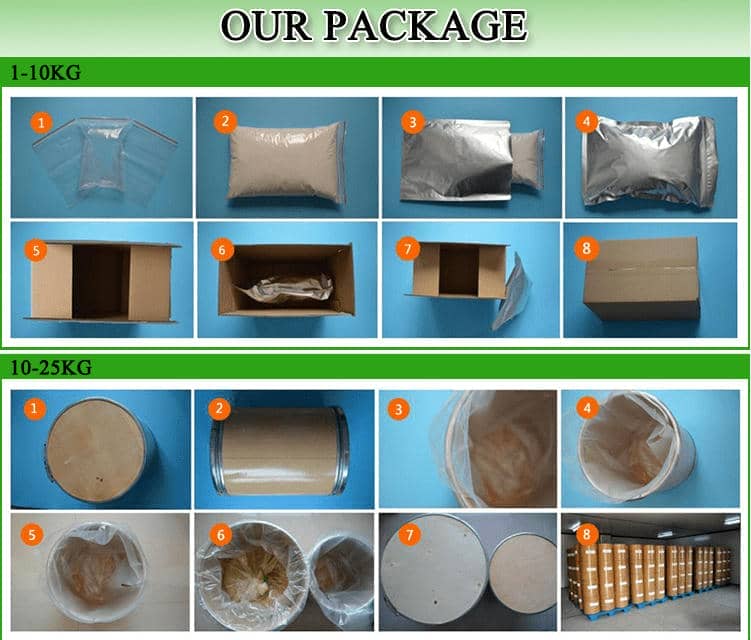
Minimal package | 1 kg bag (powder) / 1 kg bottle (liquid) |
MOQ | 1 kg (both grades) |
Samples | Complimentary samples for laboratory evaluation and pilot trials |
Lead time | 3–5 working days after payment for standard items |
Storage | Cool, dry place at room temperature; away from strong light |
What Plamed Hydroxypropyl Tetrahydropyrantriol Offers
Two grades, one INCI — 98% grade powder (purity ≥99% HPLC)and 30% liquid, both water-soluble, matching R&D trials and full-scale production alike.
Low acetic acid & borate residues — a cleaner impurity profile for premium anti-aging and repair formulations.
Structure-level anti-aging evidence — epidermal barrier (TEWL reduction), DEJ reinforcement (collagen IV/VII, laminin, perlecan) and dermal matrix (GAGs, type I procollagen, fibrillin-1), with clinical references.
Formulation flexibility — wide pH tolerance (4.0–8.0 in 10% solution), room-temperature storage, no cold chain.
Available Document of Hydroxypropyl Tetrahydropyrantriol
Certificate of Analysis (COA)
Material Safety Data Sheet (MSDS)
Composition Statement
Certificate copies: ISO 9001:2015, Halal
Regulatory support dossier (EU / US MoCRA / MFDS)
To request a quote or a sample, contact Plamed Green Science Group here.
Hydroxypropyl Tetrahydropyrantriol Manufacturer and Wholesale Supplier
Plamed is a hydroxypropyl tetrahydropyrantriol manufacturer and supplier producing two water-soluble grades — 98% grade powder (purity ≥99% HPLC)(PMKZ2202) and 30% liquid (PMKZ2201) — for anti-aging, firming and barrier-repair formulations. For buyers comparing hydroxypropyl tetrahydropyrantriol suppliers or looking for cosmetic-grade material in skin care, Plamed offers lab-evaluation samples, batch COAs and a clinical-reference data package — MOQ from 1 kg for both grades.
Hydroxypropyl Tetrahydropyrantriol Price and Wholesale Supply
Hydroxypropyl tetrahydropyrantriol price depends on grade (powder or liquid), order volume, packaging and destination-market documentation. To buy at low price without compromising purity, source directly from the manufacturer: request a wholesale quotation matched to your volume — trial batches and long-term bulk supply are both supported.
Why Source Hydroxypropyl Tetrahydropyrantriol from Plamed?
Plamed controls chemical synthesis, purification and release testing in-house, with a cleaner residue profile (low acetic acid, low borates) and two grades designed for real formulation workflows. Batch-specific COAs and clinical-reference documentation support claims development and regulatory filing for premium anti-aging lines.
Q1: What is hydroxypropyl tetrahydropyrantriol?
A: Hydroxypropyl tetrahydropyrantriol (CAS 439685-79-7) is a xylose-derived synthetic anti-aging active that promotes the synthesis of glycosaminoglycans (GAGs) and collagen in skin. The molecule was first screened out around 2000 from more than 200 xylose derivatives developed by L'Oréal researchers; Plamed supplies it under its INCI name as a 98% grade powder (purity ≥99% HPLC)and a 30% liquid.
Q2: What are the skin benefits of hydroxypropyl tetrahydropyrantriol?
A: It works on three levels: in the epidermis it reduces transepidermal water loss and improves barrier function; at the dermal-epidermal junction it strengthens the structure via type IV/VII collagen, laminin and perlecan; in the dermis it promotes hyaluronic acid, heparan sulfate, type I procollagen and fibrillin-1 — together improving sagging, fine lines and loss of elasticity.
Q3: How does hydroxypropyl tetrahydropyrantriol work in skin care?
A: It promotes the production of GAGs (the skin's water-holding matrix), up-regulates the hyaluronic acid receptor CD44 and syndecan to activate GAG-mediated signaling, and up-regulates key structural proteins across the epidermis, DEJ and dermis — rebuilding the skin's supporting structure rather than acting on a single pathway.
Q4: Is hydroxypropyl tetrahydropyrantriol suitable for sensitive skin?
A: Yes. In vitro skin experiments show it reconstructs the complete epidermal-dermal structure and enhances stratum corneum thickness similar to retinoic acid — providing barrier benefits without irritation, making it a gentle option for retinoid-intolerant skin.
Q5: Should I choose the 99% powder or the 30% liquid?
A: Both are water-soluble. The 99% powder (PMKZ2202) offers maximum concentration flexibility and a cleaner impurity profile; the 30% liquid (PMKZ2201) is pre-dissolved for direct cold-process addition and easier handling in water-based formulas. Dosage: 0.5%–2% for the powder; 0.2%–3% (leave-on) or 0.3%–5% (wash-off) for the liquid.
Q6: What is the recommended dosage in cosmetics?
A: For the 98% powder: 0.5%–2%. For the 30% liquid: 0.2%–3% in leave-on products and 0.3%–5% in wash-off products. Clinical studies referenced on this page used topical applications within these ranges.
Q7: Is hydroxypropyl tetrahydropyrantriol stable? How should it be stored?
A: Yes, it has good stability and formulation compatibility. Store both grades in a cool, dry place at room temperature, away from strong light — no cold chain required.
Q8: Is hydroxypropyl tetrahydropyrantriol safe and compliant?
A: Yes. It is recognized by PCPC (formerly CTFA), listed in the International Catalogue of Chinese Standard Names of Cosmetic Ingredients (2018) and included in China's IECIC (2021 Edition). Studies show it is readily biodegradable, does not accumulate in organisms and has no toxicity.
Q9: Is hydroxypropyl tetrahydropyrantriol the same molecule as the branded anti-aging ingredient developed by L'Oréal?
A: Chemically, yes — it is the same INCI-defined molecule first developed by L'Oréal research. Plamed supplies it under its generic INCI name from independent chemical synthesis; Plamed is not affiliated with or endorsed by L'Oréal, and the trademarked brand name is not used on this page.
Q10: What is the MOQ and packaging?
A: MOQ is 1 kg for both grades, packed as 1 kg bags (powder) or 1 kg bottles (liquid). Complimentary samples are available for laboratory evaluation — see the Procurement tab above.
Q11: How much does hydroxypropyl tetrahydropyrantriol cost?
A: Price depends on grade (powder or liquid), order volume, packaging and destination-market documentation. As the manufacturer, Plamed provides wholesale quotations matched to your volume — contact our team with your target quantity.
Q12: Which documents do you provide?
A: Each batch ships with a COA; TDS, MSDS, Composition Statement and regulatory support dossiers are available on request, together with ISO 9001:2015 and Halal certificate copies and a clinical-reference data package covering epidermal, DEJ and dermal studies.